Talks & Events
Conference presentations, invited talks, and professional activities.
91 events
•
Updated Sep 2026
The journey
My talks trace three eras: the Web & VR years (2014–2018, Mozilla Tech Speaker days — WebXR, A-Frame, OSCON, FOSDEM), the systems & security years (2019–2023 — TEEs, blockchain, decentralized infrastructure), and the current LLM & agents era (2023– — Gemini, Gemma, reasoning, AI safety). Use the timeline or filters below to jump to any era.
Planning an event?
I speak on LLM reasoning, AI agents and safety, and decentralized systems — keynotes, panels, and workshops, in person or remote.
Invite me to speakPanel
📍 Palo Alto, CA
House of AI: AI Safety Forum
Closing panel at the House of AI Safety Forum (0G Labs, Stanford Founders Club) on The $100 Billion Question: Who Is Responsible When AI Goes Wrong? — with Jon Ozdoruk (DSALTA) and Tess Hau (Tess Ventures), moderated by Amrita Bhasin (Sotira).
Talk
📍 Baltimore, MD
35th USENIX Security Symposium (USENIX Security 26)
Presented our paper “Context Contamination in LLM Analysis of Network Security Logs” at USENIX Security 2026 in Baltimore — an oral presentation plus a poster session.
Talk
📍 Google Corporate HQ, Mountain View, CA
Google OpenXLA DevLab Summer 2026
Invited talk at Google OpenXLA DevLab Summer 2026 on “Benchmarking vLLM on XLA Backends: From CUDA to OpenXLA for LLM Serving”, speaking alongside engineers from Google, NVIDIA, and Meta PyTorch.
Key points:
- Evaluating the production readiness of the matured vLLM + OpenXLA serving stack for enterprise LLM workloads
- Why raw vendor peak-throughput curves mislead and how to measure true usable goodput under strict SLOs (TTFT ≤ 1000ms, TPOT ≤ 50ms)
- Unpacking interconnect saturation: how multi-accelerator 70B tensor parallelism without NVLink collapses goodput from 9.3 to 2.4 req/s
- The cold-start compilation penalty: why static XLA tensor bucketing creates a 20–30 minute ahead-of-time wall for uncompiled shapes
- Deep dive into the 2026 unified stack: JetStream consolidation into
tpu-inference, Torchax lowering, and Ragged Paged Attention v3 achieving up to 86% MBU
Takeaway: Infrastructure decisions cannot rely on peak token throughput alone — single-variable benchmarking with fixed SLOs reveals that interconnect topologies and static compilation profiles govern production serving viability.
Talk
📍 Sonoma Raceway, California
Google I/O 2026
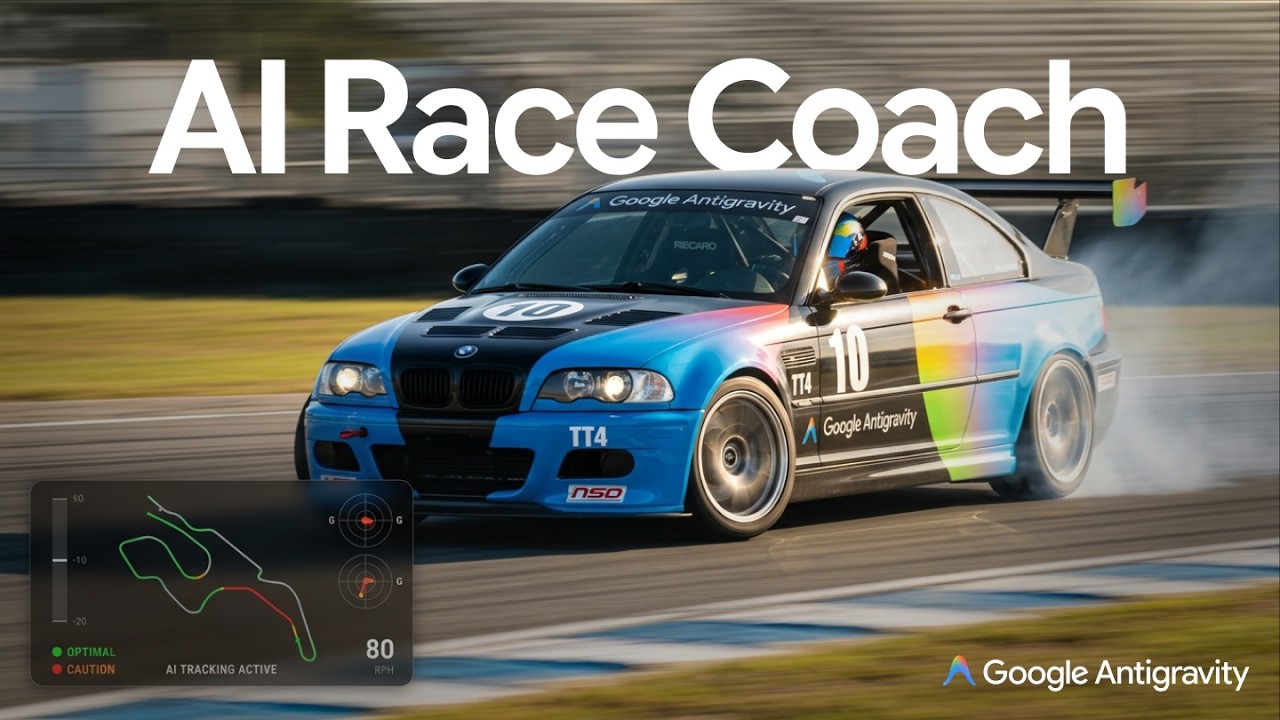
Built a real-time AI Race Coach with Google Developer Experts using Antigravity, Gemini API, Gemma 4, and Jetpack Compose. Processed live telemetry at 100 mph to deliver split-second coaching insights.
Talk
📍 Google Deepmind, CA
Google Deepmind
Talk at Google DeepMind on building trustable AI systems beyond simple chatbots.
Key points:
- Moving from conversational AI to agentic AI architecture
- Safety frameworks for production AI deployments
- The SAIF (Secure AI Framework) approach
- Trust and reliability in AI-driven decision making
Takeaway: Building trustable AI requires going beyond model accuracy to include safety frameworks, adversarial testing, and transparent decision-making processes.
Talk
📍 Seattle, WA
BSides Seattle
Talk at BSides Seattle 2026 on architecting safe and trustworthy AI agents.
Key points:
- Adversarial robustness for multi-agent AI systems
- Defense frameworks against coordinated attacks
- Security architecture for production AI agents
- Multi-agent adversarial evaluation arenas
- Lessons from building AI systems at PayPal scale
Takeaway: As AI agents become more autonomous, adversarial testing and defense frameworks are essential — building safe AI requires thinking like an attacker.
Talk
📍 Online
Google I/O 2025
Talk at Google I/O 2025 GDE Summit on bridging research and practice.
Key points:
- From academic research to production AI at PayPal
- The GDE program’s role in knowledge transfer
- Making cutting-edge research accessible to developers
- Real-world AI deployment challenges and solutions
Takeaway: The gap between research and production is bridgeable — GDEs play a key role in translating academic advances into practical guidance.
Talk
📍 Mountain View, CA
Google I/O GDE Summit
Talk at Google I/O GDE Summit 2025 on making academic research accessible to practitioners.
Key points:
- Translating PhD research into real-world products
- Lessons from building AI systems at PayPal
- Bridging the gap between academia and industry
- The GDE program as a bridge between research and practice
Takeaway: Research impact multiplies when academic findings are translated into accessible products and shared with the practitioner community.
Talk
📍 Philadelphia, PA
Drexel University Seminar
Talk at Drexel University on AI red teaming with Gemini and Vertex AI.
Key points:
- AI red teaming methodology and best practices
- Using Google Gemini and Vertex AI for adversarial testing
- The SAIF (Secure AI Framework) approach to AI security
- Identifying and mitigating vulnerabilities in AI systems
- Real-world red teaming case studies
Takeaway: AI red teaming is essential before deployment — the SAIF framework provides a systematic approach to finding and fixing AI vulnerabilities.
Talk
📍 Salt Lake City, UT
KubeCon
Talk at KubeCon 2024 on supercharging GenAI inference.
Key points:
- Distributed inference with Ray for scaling LLM serving
- Kubernetes orchestration for ML workloads
- TPU acceleration for production AI inference
- Performance benchmarks and cost optimization
- Real-world deployment architecture
Takeaway: Combining Ray, Kubernetes, and TPUs provides a scalable, cost-effective infrastructure for production GenAI inference at enterprise scale.
Talk
📍 Seoul, South Korea
Google Korea Talk
Talk at Google Korea on LLM reasoning and agentic Gemma.
Key points:
- Building agentic AI systems with Google Gemma models
- Reasoning and planning capabilities of open-weight models
- Tool use and function calling with Gemma
- On-device vs cloud deployment trade-offs
Takeaway: Open-weight models like Gemma can power sophisticated agentic AI systems with proper prompting and tool integration.
Talk
📍 Mountain View, CA
Google Mount View Seminar
Talk at Google Mountain View on LLMinABox, an on-device AI diary and concierge.
Key points:
- On-device LLM with Google Gemma for privacy
- Voice-driven interaction for personal AI
- Personalized diary and concierge without cloud data sharing
- Architecture for running LLMs locally on consumer devices
Takeaway: Privacy-preserving personal AI is possible today — Gemma runs locally, keeping your data on your device, never in the cloud.
Talk
📍 Houston, TX
GDG Houston
Talk at GDG Houston on the state of WebXR.
Key points:
- Current capabilities of the WebXR API
- Building immersive experiences with A-Frame
- Google I/O announcements related to web technologies
- Future of mixed reality on the web
Takeaway: WebXR has matured significantly — now is the time to start building immersive web experiences.
Talk
📍 Online
Invited Presentation
Walkthrough of Google Gemini and Gemma models on cloud and on-device.
Key points:
- Gemini model capabilities on Google Cloud
- Gemma open-weight models for on-device deployment
- Cloud vs on-device trade-offs: latency, privacy, cost
- Practical use cases for each approach
- Live demos of both deployment modes
Takeaway: Choose Gemini on cloud for maximum capability and Gemma on-device for privacy and latency — both have their place in production AI.
Talk
📍 Online
Invited Presentation
Talk on building applications that interact with desktop, code, and files using LLMs.
Key points:
- RAG for interacting with local files, PDFs, and code
- Multimodal AI for understanding documents
- Using your own local LLM or Google Gemini
- Voice and text interaction in any language
- Privacy-preserving local AI processing
Takeaway: You can build a personal AI assistant that reads your files, understands your code, and responds in your language — all while keeping data private.
Talk
📍 Edmonton, Canada
Invited Presentation
Talk at Google I/O Extended Edmonton 2024 on creating immersive art with AI.
Key points:
- Combining generative AI models with WebXR
- Interactive artistic experiences in the browser
- AI-powered creative tools for immersive media
- Live demo of AI-generated immersive art
Takeaway: Generative AI and WebXR together open new creative possibilities for artists and developers in the browser.
Talk
📍 Online
Stanford CS25 2024
Talk at Stanford CS25 2024 on emergent abilities and scaling in LLMs.
Key points:
- How large language models develop unexpected capabilities as they scale
- Emergent abilities: capabilities not present in smaller models but appearing in larger ones
- Implications for AI safety and alignment
- Current research directions in LLM scaling
Takeaway: Understanding emergent abilities is critical for predicting and controlling LLM behavior as models continue to scale.
Talk
📍 Online
Invited Presentation
Talk at Google Cloud Research Innovator Showcase on using TPUs as cryptographic accelerators.
Key points:
- Leveraging AI hardware (TPUs/NPUs) for polynomial multiplication
- Accelerating Fully Homomorphic Encryption (FHE) and Zero-Knowledge Proofs (ZKPs)
- Adapting cryptographic operations to AI-centric architectures
- Performance evaluation and limitations
Takeaway: AI accelerators like TPUs can be repurposed for cryptographic computations, potentially accelerating privacy-preserving technologies like FHE and ZKPs.
Talk
📍 Online
Invited Presentation
Talk explaining what Google Developer Experts (GDE) are.
Key points:
- The GDE program: what it is and how to join
- GDE community and contributions
- How GDEs help the Google developer ecosystem
- Stories from GDEs around the world
Takeaway: GDEs are passionate developers who share their expertise with the community — the program is open to anyone with deep knowledge and a desire to help others.
Talk
📍 Online
Invited Presentation
Deep dive talk on LangChain as a Google Developer Expert.
Key points:
- LangChain architecture: chains, agents, memory, tools
- Building production LLM applications
- Agent patterns for tool use and reasoning
- Integration with vector stores for RAG
Takeaway: LangChain provides the building blocks for production LLM applications — chains for pipelines, agents for autonomous reasoning, and memory for context.
Talk
📍 Zagreb, Croatia
GDG Zagreb
Talk at GDG Zagreb on the state of WebXR and building with AR/VR today.
Key points:
- State of WebXR API across browsers
- Building AR and VR experiences for the web
- Latest AR/VR technologies and tools
- Live demos of WebXR applications
Takeaway: AR/VR development for the web is accessible today with WebXR, enabling cross-platform immersive experiences without native SDKs.
Talk
📍 Zagreb, Croatia
GDG Zagreb
GDG Zagreb Online Tech Talk covering Apache Kafka, Android PhotoPicker, and WebXR.
Key points:
- State of WebXR and what you can build today with AR/VR
- Cross-platform AR/VR development using web standards
- Adapting to device capabilities from mobile to VR headsets
Takeaway: The web platform supports immersive AR/VR experiences that work across all devices with a browser.
Talk
📍 Online
Invited Presentation
Talk on SolMover, a framework for smart contract code translation based on concepts.
Key points:
- Translating Solidity smart contracts to Move using LLMs
- Concept-based retrieval for low-resource languages
- Planning, coding, and debugging agents in an iterative process
- Substantial accuracy improvements over baseline models
Takeaway: Concept-based translation enables LLMs to generate code in languages they have never seen, bridging the gap for verifiable smart contract languages like Move.
Talk
📍 Online
Invited Presentation
Talk presenting UniTranslator, a multi-agent framework for safe code translation.
Key points:
- Re-imagining code translation as collaborative multi-LLM endeavor
- Natural Language Inference (NLI) grounding for translation safety
- Handling low-resource languages like Move
- Mitigating code artifacts and hallucinations through iterative feedback
Takeaway: Multi-agent collaboration with small LLMs can rival large monolithic models for code translation, especially for domain-specific and low-resource languages.
Talk
📍 Houston, TX
Rice University Seminar
Talk at Rice University Seminar on mitigating hallucinations in AI-driven medical diagnosis.
Key points:
- Hallucination patterns in LLM-generated medical diagnoses
- Techniques to detect and reduce false medical outputs
- Safety considerations for AI in healthcare
- Evaluation frameworks for medical AI reliability
Takeaway: AI in healthcare requires extra vigilance — hallucination mitigation strategies are essential before deploying LLMs in medical diagnosis.
Talk
📍 Online
Google I/O 2024
A conversation at Google I/O 2024 about how AI and LLMs are shaping the future of the web.
Key points:
- How agentic AI is transforming web applications
- On-device inference vs cloud-based AI trade-offs
- The intersection of AI with web technologies and standards
- Real-world AI deployment challenges at PayPal scale
Takeaway: The web platform is evolving to embrace AI natively, with on-device models and agentic frameworks becoming production-ready.
Talk
📍 Berkeley, CA
Berkeley RDI Research Meeting
Talk at Berkeley RDI Research Meeting on SolMover for smart contract translation.
Key points:
- The challenge of generating Move smart contracts with limited training data
- Knowledge graph of Move concepts for retrieval-augmented generation
- Iterative refinement with planning, coding, and debugging agents
- Evaluation with open-source LLMs showing accuracy improvements
Takeaway: ConMover/SolMover addresses the low-resource code generation challenge by teaching LLMs concepts rather than syntax, enabling translation to new verifiable languages.
Talk
📍 Online
Berkeley RDI 2024
Talk at Berkeley RDI on using LLMs for safe code translation between programming languages.
Key points:
- The SolMover framework for concept-based code translation
- Translating smart contracts between Solidity and Move
- Multi-agent collaboration for safe code generation
- Handling low-resource and domain-specific languages
Takeaway: LLMs can translate code between languages they have never seen by learning concepts rather than syntax, enabling safe translation for domain-specific languages.
Talk
📍 New York, NY
Columbia University
Talk at Columbia University on privacy-aware zero-knowledge login.
Key points:
- Zero-knowledge proof authentication
- OAuth2 with Passkey integration
- Privacy-preserving login without sharing credentials
- Modern authentication best practices
Takeaway: Zero-knowledge login with Passkeys provides stronger security than passwords while preserving user privacy.
Talk
📍 Online
Invited Presentation
Hands-on workshop on developing applications with Google Vertex AI and Gemini 1.0 Pro.
Key points:
- Model deployment on Google Cloud Vertex AI
- Prompt engineering with Gemini 1.0 Pro
- Building production AI applications
- Integration with Google Cloud services
Takeaway: Vertex AI + Gemini provides a complete pipeline for deploying production AI applications on Google Cloud.
Talk
📍 Online
Invited Presentation
Hands-on session introducing function calling with Google Gemini API.
Key points:
- Connecting LLMs to external tools and APIs
- Building agentic applications with function calling
- Practical examples of Gemini function calling
- Best practices for prompt engineering with tools
Takeaway: Function calling bridges the gap between LLMs and real-world tools, enabling AI agents that can take actions beyond text generation.
Talk
📍 Kansas City, MO
University of Missouri - Kansas City
Workshop at University of Missouri - Kansas City on giving web apps superpowers with Generative AI and MediaPipe.
Key points:
- On-device AI with Google MediaPipe for image processing
- Gesture recognition and hand tracking in the browser
- Real-time ML inference without server calls
- Combining Generative AI with web applications
Takeaway: MediaPipe brings production-quality ML to the browser, enabling real-time AI features without sending data to the cloud.
Talk
📍 Seattle, WA
University Of Washington Workshop
Hands-on workshop at University of Washington on LLM application components and design patterns.
Key points:
- RAG (Retrieval-Augmented Generation) architecture patterns
- Agent design patterns for tool use and planning
- Memory management for long conversations
- Building production LLM systems with proper evaluation
Takeaway: Production LLM applications require thoughtful architecture — RAG for knowledge, agents for action, and proper evaluation for reliability.
Talk
📍 San Jose, CA
Google San Jose Meetup
Talk at Google San Jose Meetup on building on-device generative AI in the browser.
Key points:
- Running image generation models in the browser with WebGPU
- TensorFlow.js for on-device ML inference
- Building a DALL-E-like image generator that runs locally
- Privacy benefits of on-device AI
Takeaway: WebGPU enables real AI computation in the browser — you can run generative models locally without sending data to any server.
Talk
📍 Berkeley, CA
Berkeley RDI
Talk at Berkeley RDI presenting an empirical study evaluating the quality of smart contracts generated by LLMs.
Key points:
- Systematic evaluation of ChatGPT and Google Palm2 for Solidity code generation
- Analysis of validity, correctness, and security of AI-generated smart contracts
- Security bugs introduced by LLMs in generated code
- Impact of input quality and prompting strategies on output
Takeaway: While LLMs can generate functional smart contracts, they introduce security vulnerabilities that require careful review and testing before deployment.
Talk
📍 Chapel Hill, NC
Google Mt. View & NC Chapel Hill
Talk on DeepSpeech and the journey to achieving less than 10% word error rate in automatic speech recognition.
Key points:
- Mozilla DeepSpeech architecture and training
- Challenges in achieving low word error rates
- On-premise ASR deployment for privacy
- Real-world deployment at Fireflies.ai serving 10M+ users
Takeaway: Open-source ASR can achieve production-quality results while keeping speech data on-premise for privacy.
Talk
📍 Online
Invited Presentation
Talk on the GDE Stage at Google North America Connect 2022 on the state of Web Mixed Reality.
Key points:
- Evolution from WebVR to WebXR
- Current state of mixed reality on the web
- Google’s commitment to WebXR in Chrome
- GDE community contributions to web technologies
Takeaway: WebXR has replaced the separate WebVR and WebAR standards with a unified API, making mixed reality development simpler.
Talk
📍 Chapel Hill, NC
GDG DevFest 2022 2022
Talk at North Carolina DevFest 2022 on DeepSpeech architecture.
Key points:
- DeepSpeech neural network architecture explained
- Training pipelines for speech recognition models
- Optimizing for different languages and accents
- Live demo of on-device speech recognition
Takeaway: Open-source speech recognition has matured to the point where it can be deployed in production with accuracy rivaling commercial offerings.
Talk
📍 Sydney, Australia
NDC Sydney 2020
Talk at NDC Sydney 2020 on the state of WebXR.
Key points:
- Unifying VR, AR, MR, XR — what do they all mean for developers?
- Why now? The convergence of browser support and hardware
- What you need to know to build mixed reality experiences
- Mozilla Mixed Reality team’s work on bridging platforms
- Building WebVR with A-Frame and WebAR without markers
Takeaway: The virtual world is cluttered with jargon, but WebXR simplifies it — one API for all immersive experiences, running in any browser.
Talk
📍 Online
FOSDEM 2020
FOSDEM 2020 JavaScript Devroom talk on building decentralized social VR with WebXR.
Key points:
- Building auditable, privacy-aware social VR in JavaScript
- Decentralized room hosting for censorship resistance
- IPFS integration for decentralized asset delivery
- Adapting to Mixed Reality capabilities of each device
- Cross-platform from phone to high-end VR headset
Takeaway: Decentralized social VR is technically feasible today using WebXR, IPFS, and open-source tools — enabling user-hosted, privacy-respecting virtual spaces.
Talk
📍 Online
Invited Presentation
Talk at FOSDEM 2020 on building auditable, privacy-aware social VR experiences using WebXR.
Key points:
- Building social VR spaces that run entirely in the browser
- Decentralized room hosting resistant to takedowns
- Privacy-aware design with auditable code
- Cross-platform support from mobile to high-end VR headsets
- IPFS integration for decentralized asset hosting
Takeaway: You can build fully functional, privacy-respecting social VR experiences using only JavaScript, WebXR, and decentralized protocols — no SDK lock-in required.
Talk
📍 Online
Invited Presentation
Talk at Selenium Conference 2020 on testing Web VR/AR Mixed Reality applications.
Key points:
- WebXR specification and the W3C Immersive Web Group
- Differences between testing regular web pages and Mixed Reality
- How to define “smooth” vs just “responsive” in VR
- Automation strategies for MR testing
- Performance metrics for immersive experiences
Takeaway: Testing Mixed Reality requires new approaches — traditional web testing tools need adaptation for spatial, immersive, and motion-based interactions.
Talk
📍 Paris, France
Mozilla Meetup
Mozilla TechSpeaker Paris Meetup talk introducing jARvis, a voice-driven assistant.
Key points:
- Introduction to jARvis, a JavaScript-based voice assistant
- Voice interaction with web technologies
- Mozilla TechSpeaker program overview
- Live demo of voice-driven web interactions
Takeaway: Voice-driven web applications are buildable today with open web APIs — no proprietary assistants needed.
Talk
📍 Online
Invited Presentation
Lightning talk for Mozilla TechSpeaker Singapore Meetup on Voice Driven VR.
Key points:
- Voice interaction for VR experiences
- Web Speech API integration with WebVR
- Hands-free VR navigation and control
- Accessibility benefits of voice-driven VR
Takeaway: Voice-driven VR makes immersive experiences more accessible and natural — the Web Speech API brings voice to web-based VR.
Talk
📍 Ranchi, India
GDG DevFest Ranchi 2019
Talk at DevFest Ranchi 2019 on DeepSpeech and the journey to less than 10% word error rate.
Key points:
- Mozilla DeepSpeech open-source ASR engine
- Training and fine-tuning speech models
- Achieving production-quality accuracy
- Deployment at Fireflies.ai for 10M+ users
Takeaway: Open-source speech recognition can match commercial accuracy while keeping data private and on-premise.
Talk
📍 Edinburgh, UK
Data Driven Innovation
Talk at the Data Driven Innovation conference in Edinburgh on AI and data-driven web applications.
Key points:
- Using data-driven approaches for scalable web applications
- AI-powered analytics and visualization
- VR as a data visualization platform
- Open web standards for data-driven innovation
Takeaway: Data-driven innovation requires combining AI, web technologies, and open standards to create accessible and scalable solutions.
Talk
📍 Bangalore, India
DevDay
Talk at DevDay on WebVR and open web technologies.
Key points:
- Building cross-platform VR with JavaScript
- The WebXR API and browser support landscape
- A-Frame as a beginner-friendly VR framework
- Demos of browser-based VR experiences
Takeaway: The open web is a viable platform for VR development, offering cross-platform compatibility without vendor lock-in.
Talk
📍 Dallas, TX
UT Dallas
Tech talk at UT Dallas Welcome Week on WebVR and emerging web technologies.
Key points:
- Introduction to WebVR and the WebXR API
- Building VR experiences with A-Frame
- Career paths in web and VR development
- Open source contributions and community
Takeaway: Students can start building VR experiences today using web technologies they already know — no special equipment needed to get started.
Talk
📍 Portland, OR
OSCON 2018
Talk at O’Reilly OSCON 2018 on WebVR and Mozilla Mixed Reality. Video available on O’Reilly platform.
Key points:
- Bridging VR, AR, MR, and XR technologies with open web standards
- The WebXR API as a unified standard
- Building VR apps with A-Frame without vendor lock-in
- Mozilla’s role in the Immersive Web Working Group
- Live coding and demos
Takeaway: Open source VR through WebXR ensures immersive computing remains accessible to all developers, not just those with proprietary SDKs.
Workshop
📍 Portland, OR
OSCON 2018
Tutorial at O’Reilly OSCON 2018 on building WebVR experiences.
Key points:
- Hands-on WebVR development with A-Frame
- Building interactive VR scenes from scratch
- Performance optimization for web-based VR
- Deploying VR experiences to any browser
Takeaway: Attendees left with a working VR experience built entirely with web technologies, ready to deploy.
Talk
📍 Virginia Beach, VA
RevolutionConf
Talk at RevolutionConf on WebVR and Mixed Reality.
Key points:
- The WebXR API and A-Frame framework
- Building immersive experiences for the open web
- Cross-platform VR without vendor lock-in
- Live coding demo
Takeaway: The web is the most accessible platform for VR development — no app stores, no SDK fees, just open standards.
Talk
📍 Boston, MA
OpenVis Conf
Talk at OpenVis Conf on visualizing data in 3D VR worlds using A-Frame.
Key points:
- Data visualization in immersive 3D environments
- A-Frame for building data-driven VR scenes
- Interactive data exploration in VR
- Benefits of spatial data visualization over 2D charts
Takeaway: VR transforms data visualization — immersive 3D environments reveal patterns and relationships that flat charts cannot show.
Talk
📍 London, UK
Fullstack Conf
Talk at Fullstack London on building browser-based VR experiences with WebVR and A-Frame.
Key points:
- WebVR API and browser support
- A-Frame framework for declarative VR development
- Performance optimization for web-based VR
- Cross-platform deployment strategies
Takeaway: Browser-based VR is production-ready and accessible to any web developer willing to learn the WebXR API.
Talk
📍 Online
Mozilla Meetup
Talk at Immersive Technology Conference on the state of WebVR, A-Frame, and Mozilla’s work on Web Mixed Reality.
Key points:
- Journey through VR history to the current Mixed Reality landscape
- WebVR API and A-Frame framework for browser-based VR
- Building VR and AR experiences with JavaScript
- Use cases, real-life applications, and case studies
- Live coding and demos
Takeaway: The past, present, and future of mixed reality is on the web — A-Frame and WebVR make it accessible to any web developer.
Talk
📍 New York, NY
DevWeek NYC
Talk at DevWeek NYC 2018 on the state of WebXR and building web mixed reality applications.
Key points:
- Current state of WebVR, WebAR, and the unified WebXR API
- What developers need to know to build mixed reality apps
- Browser support and device compatibility
- Mozilla Mixed Reality team’s contributions
Takeaway: WebXR is the unified standard for mixed reality on the web — developers should start building with it now.
Talk
📍 Austin, TX
DeveloperWeek
Talk at DeveloperWeek Austin 2017 on mixing real and virtual in WebAR.
Key points:
- Augmented and mixed reality for everyone using web standards
- WebAR without markers using the WebXR API
- Mixing real-world camera input with virtual objects
- Cross-platform AR without SDK lock-in
Takeaway: WebAR brings augmented reality to billions of devices through the browser, no app installation required.
Talk
📍 Online
Invited Presentation
Talk at Mobile Day 2017 on VR for Humans using WebVR and A-Frame.
Key points:
- Building VR experiences without expensive ecosystems or new technology stacks
- Creating immersive VR with the same toolchain web developers already know
- A-Frame for declarative VR development
- Cross-platform VR from mobile to high-end headsets
Takeaway: VR is for humans — not just developers with expensive hardware. WebVR and A-Frame make it accessible to anyone who can build a web page.
Talk
📍 Mexico City, Mexico
Mobile Day
Talk at Mexico City Mobile Day on VR for Humans using WebVR and A-Frame.
Key points:
- Building VR experiences for mobile devices
- WebVR and A-Frame for cross-platform VR
- Creating immersive worlds with JavaScript
- No expensive hardware or SDKs needed
Takeaway: VR is for everyone — with WebVR and A-Frame, any mobile developer can create immersive experiences that run in a browser.
Talk
📍 San Francisco, CA
Chrome Dev Summit
Attended and showcased WebVR at Google Chrome Dev Summit.
Key points:
- WebVR demonstrations and discussions with Chrome team
- Browser-level VR support and performance
- Future of WebXR in Chrome
- Networking with web platform engineers
Takeaway: Chrome’s commitment to WebXR signals that browser-based VR is a first-class platform, not an experiment.
Talk
📍 Cambridge, MA
MIT Media Lab
Talk at MIT Media Lab on turning sensors into signals and freeing IoT from walled gardens.
Key points:
- Humanizing IoT with old smartphones and web technologies
- Using JavaScript to process sensor data on the edge
- Privacy-aware IoT design avoiding cloud dependency
- Open web standards as an alternative to proprietary IoT platforms
- Freeing IoT from walled gardens with open protocols
Takeaway: You don’t need expensive IoT platforms — old smartphones and JavaScript can create privacy-aware, open IoT systems that keep data local.
Talk
📍 Los Angeles, CA
LinuxCon ContainerCon
Talk at LinuxCon on hardening IoT endpoints with a preventive toolkit. Slides available.
Key points:
- Security risks of default embedded Linux configurations
- A cookbook toolkit for hardening Raspberry Pi and similar devices
- Audit and behavioral analysis for continuous monitoring
- Code examples and live demonstrations
- Preventing device takeover and botnet recruitment
Takeaway: IoT security is not optional — the toolkit provides a systematic, code-level approach to hardening embedded Linux devices against common attacks.
Talk
📍 Los Angeles, CA
LinuxCon ContainerCon
Talk at LinuxCon ContainerCon on hardening IoT endpoints with a preventive toolkit.
Key points:
- Security risks of default Raspberry Pi configurations
- A cookbook toolkit for hardening embedded Linux devices
- Audit and behavioral analysis techniques
- Preventing botnet recruitment (e.g., Mirai-style attacks)
Takeaway: Securing IoT devices is critical — a single unpatched Raspberry Pi can become part of a botnet. The toolkit provides a systematic approach to hardening.
Talk
📍 Singapore
Singapore Leadership Summit
Presentation at Singapore Leadership Summit on Mozilla Connected Devices and TechSpeaker program.
Key points:
- Mozilla’s Connected Devices strategy and vision
- Privacy-first IoT and smart home technology
- TechSpeaker program for community evangelism
- Open standards for connected devices in Asia
Takeaway: Mozilla’s approach to connected devices demonstrated that IoT can be both useful and privacy-respecting.
Talk
📍 Kansas City, MO
KCDC
Talk at Kansas City Developer Conference 2017 on building WebVR with A-Frame.
Key points:
- WebXR API and A-Frame framework introduction
- Building VR scenes with declarative HTML
- Cross-platform VR from mobile to desktop
- Live coding demo
Takeaway: A-Frame makes VR development as approachable as web development — if you know HTML, you can build VR.
Talk
📍 Portland, OR
Open Source Bridge
Talk at Open Source Bridge 2017 on open web and VR technologies.
Key points:
- WebVR and A-Frame for open VR development
- Building immersive experiences with web standards
- No vendor lock-in for VR content
- Community-driven VR framework
Takeaway: Open source VR through A-Frame ensures VR content creation remains accessible and不被 locked into any platform.
Talk
📍 Brisbane, Australia
Web3d Conference
Talk on optimizing WebVR performance, from the MS thesis at Rice University.
Key points:
- WebGL rendering optimization for VR workloads
- Three.js performance tuning techniques
- Browser-level JavaScript parallelization for VR
- Offloading computations to GPU with WebAssembly
- Object loading and texture rendering optimization
Takeaway: WebVR can achieve near-native performance with careful optimization of the rendering pipeline, GPU offloading, and browser-level parallelism.
Talk
📍 London, UK
MozLondon
Mozilla Connected Devices Team presentation at MozLondon.
Key points:
- Mozilla’s vision for connected devices and IoT
- Privacy-first approach to smart home technology
- Open standards for IoT communication
- Community-driven IoT projects
Takeaway: Mozilla’s connected devices initiative demonstrated that IoT can be privacy-respecting and open, unlike many commercial offerings.
Talk
📍 Redmond, WA
ACM SIGGRAPH Web3D
Presentation at ACM SIGGRAPH Web3D on optimizing WebVR performance.
Key points:
- WebGL rendering pipelines for VR applications
- Three.js optimization techniques for complex scenes
- Browser-level parallelism for VR workloads
- Performance benchmarks across different VR headsets
Takeaway: WebVR can achieve native-like performance with careful optimization of the rendering pipeline and leveraging browser-level GPU acceleration.
Talk
📍 Portland, OR
Linux Foundation Open IoT & ELC
Talk at Linux Foundation Open IoT & ELC on hardening Raspberry Pi security.
Key points:
- Security risks of default Raspberry Pi configurations
- A toolkit and cookbook for hardening Pi devices
- Techniques for preventing botnet recruitment
- Continuous audit and behavioral analysis
- Code examples and live demonstrations
Takeaway: Protecting your IoT device protects everyone — an unsecured Raspberry Pi can become part of a botnet like the Mirai DDoS attack. The IronClad toolkit makes hardening systematic.
Talk
📍 Santa Clara, CA
Open Networking Summit
Talk at Open Networking Summit on the state of WebVR and A-Frame.
Key points:
- Evolution of WebVR from early experiments to the WebXR standard
- A-Frame as a declarative framework for VR development
- Yesterday: early WebVR prototypes
- Today: production-ready WebXR in all major browsers
- Tomorrow: mixed reality and beyond
Takeaway: WebVR has come a long way from experimental prototypes to a production-ready standard — the future is mixed reality on the open web.
Talk
📍 San Jose, CA
SVVR
Talk at Silicon Valley Virtual Reality meetup on VR for Humans with WebVR.
Key points:
- Building VR worlds with WebVR and A-Frame
- Creating immersive experiences for any browser
- Cross-platform VR from mobile to high-end headsets
- Open web as an alternative to proprietary VR platforms
Takeaway: The open web is the most democratic platform for VR — anyone with a browser can experience and create VR content.
Talk
📍 Cambridge, MA
LibrePlanet
Talk at LibrePlanet 2017 on open source, VR, and the Mozilla Mixed Reality team.
Key points:
- Making VR accessible through open web standards
- WebVR and A-Frame as open alternatives to proprietary VR SDKs
- Mozilla’s role in keeping the web open for VR
- Community contributions to WebVR
Takeaway: Open source VR through WebVR and A-Frame ensures that immersive computing remains accessible and不被 vendor-locked.
Talk
📍 Dundee, UK
Securi-Tay
Talk at Securi-Tay 2017 on security, covering static analysis and systems security.
Key points:
- Static analysis for code security
- Security challenges in emerging web technologies
- IoT device security hardening
- Model checking and proof-carrying code
Takeaway: Security must be built into development from the start — static analysis and formal methods can catch vulnerabilities before deployment.
Talk
📍 San Jose, CA
OpenIoT Summit
Talk at Linux Foundation OpenIoT Summit on IoT and connected devices.
Key points:
- Using JavaScript and web technologies for IoT applications
- Privacy-aware IoT design principles
- Connecting sensors to the web platform
- Open standards for IoT communication
Takeaway: The web platform provides a privacy-respecting, vendor-neutral foundation for IoT development using open standards.
Talk
📍 San Francisco, CA
DeveloperWeek
Talk at DeveloperWeek 2017 on building WebVR applications using A-Frame.
Key points:
- Introduction to the WebVR API and A-Frame
- Building VR scenes with HTML-like syntax
- Cross-platform VR deployment from mobile to desktop
- Live coding demo of a VR experience
Takeaway: Web developers can create VR experiences using skills they already have — HTML, CSS, and JavaScript — with A-Frame.
Talk
📍 San Jose, CA
OpenIoT Summit
Workshop at Linux Foundation OpenIoT Summit on building virtual reality worlds using WebVR and A-Frame.
Key points:
- Creating immersive VR scenes with A-Frame entities
- JavaScript-based VR development without game engines
- Running VR experiences on any device with a browser
- Connecting IoT data streams to VR visualizations
Takeaway: WebVR and A-Frame make VR development accessible to web developers, no specialized game engine knowledge needed.
Talk
📍 London, UK
Mozfest
A Mozfest session exploring the privacy implications of connected IoT devices.
Key points:
- How smart devices collect behavioral and environmental data
- Privacy concerns around data retention and observation
- Ethical implications of always-on connected devices
- User awareness and control over their data
Takeaway: Users should understand what their connected devices know about them and demand transparent, privacy-respecting IoT designs.
Workshop
📍 London, UK
Mozfest
Workshop at Mozfest on painting with VR using A-Painter.
Key points:
- Hands-on VR painting with A-Painter (Mozilla’s Tilt Brush alternative)
- Creating 3D art in the browser with WebVR
- Sharing VR paintings online
- No expensive software needed — just a browser and VR headset
Takeaway: VR painting is accessible to everyone through the browser — A-Painter brings creative VR tools to the open web.
Workshop
📍 London, UK
Mozfest
Workshop at Mozfest on building WebVR and WebAR experiences.
Talk
📍 Boston, MA
GraphicalWeb
Talk at GraphicalWeb 2016 on web graphics and VR.
Key points:
- WebGL rendering optimization techniques
- Three.js performance for complex scenes
- The emerging WebVR standard
- Browser GPU acceleration for graphics
Takeaway: The web is becoming a serious platform for high-performance graphics and VR, powered by WebGL and emerging WebVR standards.
Talk
📍 Berlin, Germany
ViewSource
Game demo and VR booth at ViewSource Berlin.
Key points:
- Hands-on VR demos built with WebVR and A-Frame
- Showcasing browser-based VR games
- Community engagement with Mozilla technologies
- Networking with European web developers
Takeaway: Browser-based VR games are fun and functional — ViewSource Berlin showcased the creative potential of WebVR.
Talk
📍 Berlin, Germany
Mozilla TechSpeaker
Speaker at Mozilla TechSpeaker Berlin Meetup.
Key points:
- Mozilla TechSpeaker program for community evangelism
- Web technologies and emerging standards
- Community building through tech talks
- Open web advocacy
Takeaway: The Mozilla TechSpeaker program empowered community members to spread open web technologies globally.
Talk
📍 Porto Alegre, Brazil
BrazilJS
Talk at BrazilJS on the state of WebVR and building immersive experiences with A-Frame.
Key points:
- Introduction to the WebVR API and A-Frame framework
- Building cross-platform VR experiences with JavaScript
- Demo of social VR experiences running in the browser
- The future of WebXR and mixed reality on the web
Takeaway: WebVR democratizes VR development — anyone with JavaScript skills can build immersive experiences that run on any device with a browser.
Talk
📍 Portland, OR
Open Source Bridge
Talk at Open Source Bridge 2016 on open web technologies.
Key points:
- WebVR, A-Frame, and the Mozilla Mixed Reality ecosystem
- Open standards for immersive web experiences
- Community contributions to the WebVR specification
- Demos of browser-based VR
Takeaway: The open source community is driving the future of immersive web experiences through WebVR and A-Frame.
Talk
📍 Hong Kong
Open Source Hong Kong
Talk at Open Source Hong Kong on open web and VR.
Key points:
- The WebVR standard and browser support
- A-Frame framework for VR development
- Building immersive experiences with JavaScript
- Open web vs proprietary VR platforms
Takeaway: The open web provides a universal platform for VR that works in Hong Kong as well as anywhere else — no app stores, no gatekeepers.
Talk
📍 Online
Invited Presentation
Talk on building a self-learning word prediction module for multilingual input.
Key points:
- Language input challenges on mobile devices
- Predictive text that learns from user behavior
- Supporting localized languages (Hindi, Bengali)
- Implementation as an open web app for Firefox OS
- Transliteration and IME challenges
Takeaway: Self-learning prediction adapts to each user’s language and typing style, outperforming static dictionaries for multilingual input.
Talk
📍 Bangalore, India
JSFoo
Talk at JSFoo 2015 on building a self-learning word prediction module for Firefox OS.
Key points:
- Predictive text input for mobile devices
- Self-learning from user typing patterns
- Handling multilingual input (Hindi, Bengali)
- Implementation in JavaScript for Firefox OS
- Challenges with transliteration systems
Takeaway: Self-learning word prediction can significantly improve typing experience for localized languages, adapting to each user’s patterns over time.
Talk
📍 Online
Open Source Bridge 2015
Talk at Open Source Bridge 2015 on building a self-learning word prediction and auto-correct module for Firefox OS.
Key points:
- Predictive text for mobile devices using JavaScript
- Self-learning from user typing patterns
- Handling multilingual input (Hindi, Bengali, IME languages)
- Implementation in Firefox OS as an open web app
- Transliteration challenges and solutions
Takeaway: Self-learning word prediction works for any language — the open web enables predictive text that adapts to users, not the other way around.
Talk
📍 Portland, OR
Open Source Bridge
Talk at Open Source Bridge 2015 on building a self-learning word prediction module.
Key points:
- Self-learning word prediction for multilingual input
- Implementation for Firefox OS in JavaScript
- Adapting to user typing patterns over time
- Challenges with localized languages (Hindi, Bengali)
Takeaway: Open source predictive text can adapt to users and languages that commercial offerings often ignore.
Talk
📍 New York, NY
WikiConference USA
Talk at WikiConference USA 2014 on open knowledge and web technologies.
Key points:
- Contributing to Wikipedia and open knowledge platforms
- Web technologies for collaborative content creation
- Open source tools for the knowledge community
- Bridging technical and content communities
Takeaway: Open knowledge platforms like Wikipedia rely on both content contributors and technical contributors — both are essential.
Talk
📍 Online
Confluence 2012
Talk at Confluence 2012 on QA Robotics and innovation in automated testing.
Key points:
- Automated mobile hardware and software testing with robotics
- OpenCV-based vision systems for QA
- Innovation in testing frameworks at Cognizant
- Live demo of robotic QA testing
Takeaway: Robotics combined with computer vision can automate hardware QA testing that would be impossible manually.
No events match your search.